


21 May Is it possible to charge an electric car with solar energy?
If you have solar panels, or are thinking of adding a solar installation to your home, and you have an electric car, or are thinking of buying one, you have probably wondered: can I charge an electric car with solar energy generated at my home?
The answer is yes, and doing so is not only possible, but it is a very efficient, cost-effective and sustainable way to take advantage of the solar energy generated in your home.
At Soma-GenPower, we are very clear that the importance that photovoltaic solar energy is reaching is not only based on generating electricity, but on using it efficiently to cover daily needs, such as recharging electric vehicles.
In this article we explain how solar charging of electric vehicles works and what you need to do it right.
Is it possible to charge an electric car with solar energy?
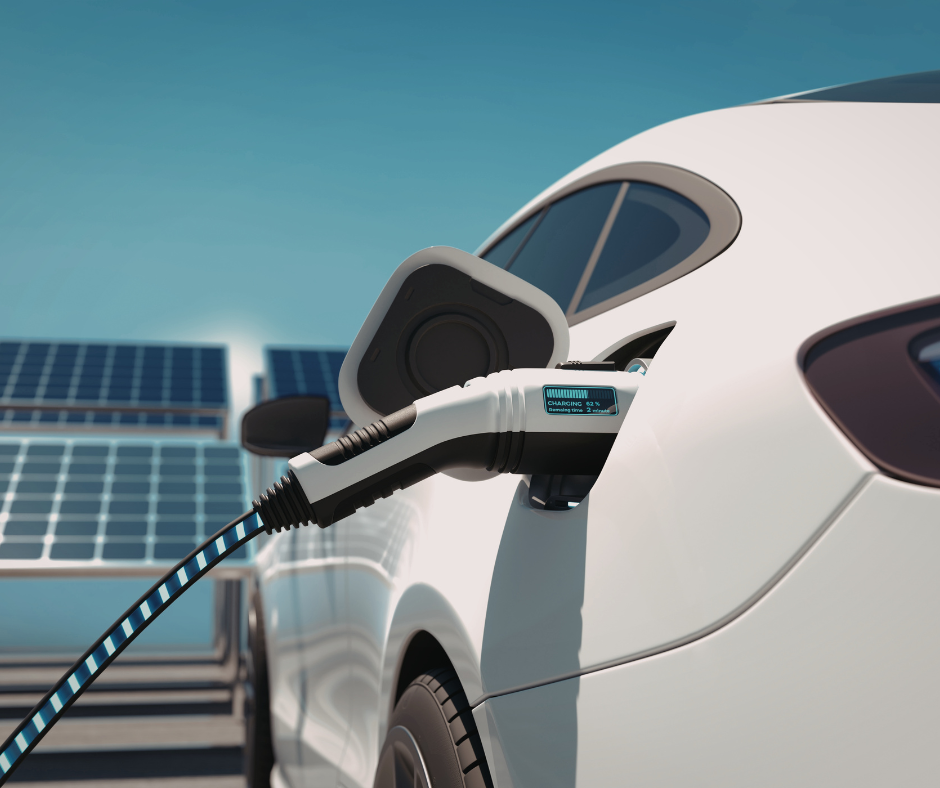
Yes. The energy produced by the solar panels of your home or industrial solar installation can be used to power your electric vehicle charger and charge an electric car with solar energy.
Advantages of charging your electric car with solar panels
 The main advantage is savings . Charging your vehicle with solar energy helps reduce expenses associated with fuel or electricity from the grid, especially in homes or businesses with high mobility demands.
Another important advantage is sustainability . The combination of solar energy and electric vehicles helps reduce polluting emissions and contributes to a cleaner and more efficient energy model.
Energy autonomy is also a key advantage . A well-designed system offers greater control over consumption, more predictable bills, and greater independence from fluctuations in the electricity market. And, of course, locally sourced energy has only benefits, no matter how you look at it.
We would also highlight the increased property value. Homes with solar installations and charging points are increasingly valued for their efficiency and sustainability.
With the implementation of electric vehicles, the installation of solar panels, whether for residential or industrial use, drastically reduces the payback period of the installation, going from 4/6 years to 2/3 years of return on investment, charging the electric vehicle on it.
The challenge lies in synchronization: the panels produce energy when the sun is shining, but you might not be home or your car might not be plugged in at that moment. Therefore, simply having panels isn’t enough: you need a system designed to harness that energy intelligently.
What you need to charge an electric car with solar energy
Photovoltaic installation with sufficient power
Not just any solar installation is suitable for charging an electric car. A small installation might cover household consumption but leave little room for the car. An electric vehicle needs between 15 and 20 kWh per 100 km, depending on the model.
If you average 40 km per day—which is typical for commutes in Spain—you need to replenish about 6-8 kWh of energy daily. To generate this with solar power, your system should have at least 4-6 kW of panel capacity, although ideally it should be sized to also take into account the rest of your household energy consumption.
A home charger (wallbox)
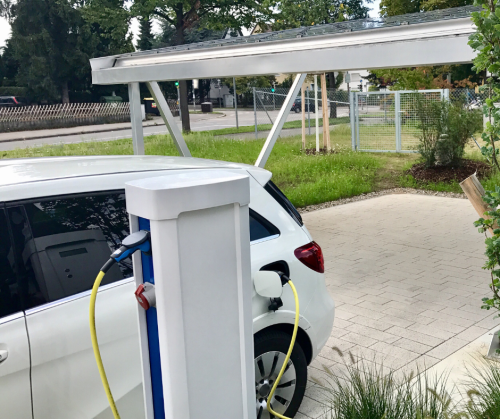 It is not recommended to regularly charge your car directly from a standard wall outlet. The process is slow, less safe in the long run, and does not allow for intelligent charging control.
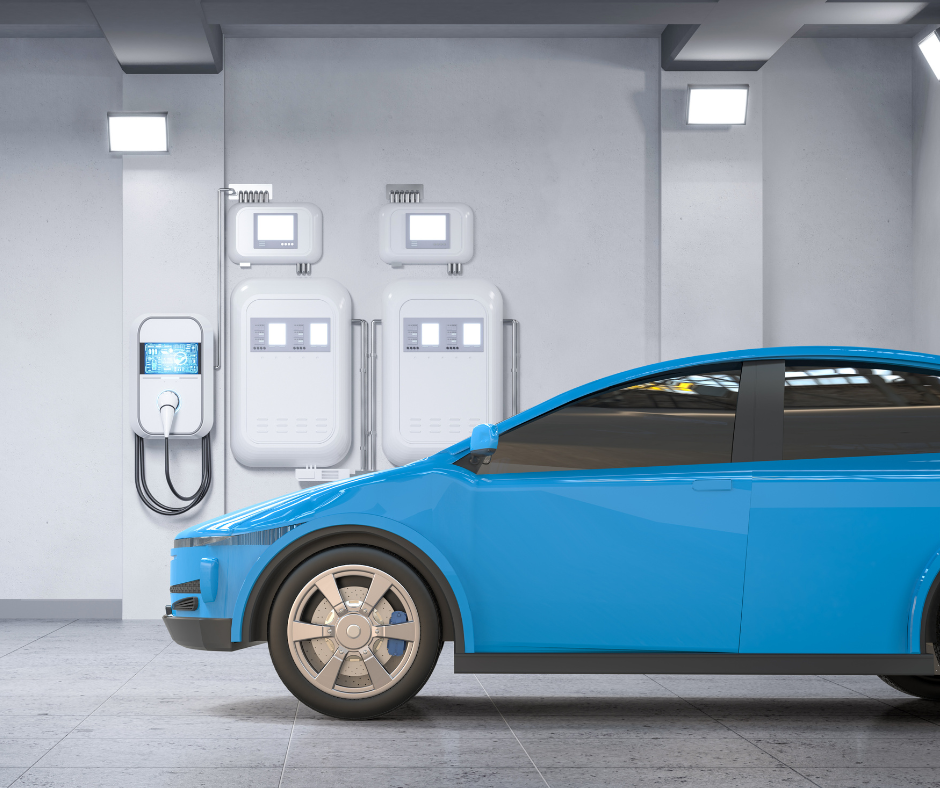
A wallbox or home wall charger offers charging speeds between 7.4 and 22 kW, time management and, in the most advanced models, direct integration with your photovoltaic installation to charge only when there is solar surplus.
Intelligent Energy Management (EMS)
An energy management system (EMS) monitors in real time how much energy your panels are producing, how much your house is consuming, and how much is available for the car.
With this system, the vehicle charger activates automatically when there is excess solar energy and slows down or stops charging when production drops. The result is that the car primarily absorbs solar energy, drawing from the grid only when necessary to charge an electric vehicle using solar power.
Storage batteries (optional but highly recommended)
Adding batteries to your system improves things considerably. During the day, any excess energy not used by the house or car is stored. At night, when you arrive home in your car, you can charge it with that energy stored during the day, at no cost.
Batteries extend the window for solar energy use and give you much more independence from the electrical grid.
Not all installations are the same. The required power will depend on the vehicle’s consumption, the distance traveled, the contracted power, and the solar production available at the home or building.
Therefore, before installing a solar charging system, it’s advisable to conduct a technical study analyzing the roof’s orientation, available space, consumption profile, and actual charging needs. At Soma GenPower, we are committed to customized solutions because every project requires a specific design to be truly efficient.
How many solar panels are needed?
It will depend mainly on:
- Vehicle fuel consumption.
- The kilometers traveled per year.
- The power of the installation.
- Loading and driving habits.
As a guideline, a well-sized residential installation can cover a significant part—or even all—of the usual charging needs of an electric car.
At Soma-Genpower we study each case to design efficient and personalized solutions, optimizing both domestic consumption and vehicle charging.
I already have a solar installation. Does it need to be adapted?
If you already have solar panels, the first step is to conduct a study to determine if your installation has sufficient power to meet the car’s additional energy demands. In many cases, simply adding the appropriate wallbox and management system will suffice. In others, it may be necessary to expand the installation with more panels, a more powerful inverter, or even double the existing one, or to incorporate batteries. The advantage of current photovoltaic solar production, storage, and distribution systems is their high scalability, allowing installations to be expanded beyond 300% of their initial capacity.
If you don’t yet have a solar installation and are thinking about getting one now, or if you need a well-sized expansion of your existing one, this is the best time to size it to include the electric vehicle in your system. This way, you avoid running out of power in a few years and optimize your investment from day one.
At Soma-Genpower we help you design a solar-powered electric car charging installation tailored to your needs so you can make the most of the sun’s energy and take the step towards more efficient mobility.
Conclusion
Combining solar panels with electric vehicles is now one of the most cost-effective decisions an individual or a company with an EV fleet can make. The price of the technology has dropped significantly, Spanish regulations facilitate its adoption, and the savings are real and verifiable.
If you are in Lleida or anywhere in Catalonia or Aragon and want more information on how to charge an electric car with solar energy, know exactly how many panels you need, which wallbox best suits your installation and whether it is worth adding batteries, at Soma-GenPower we carry out personalized feasibility studies without obligation.
Contact us and we’ll tell you exactly how much you can save based on your specific situation.
Did you find this article helpful? Share it with someone who’s thinking about switching to an electric car and/or solar energy.
No Comments