

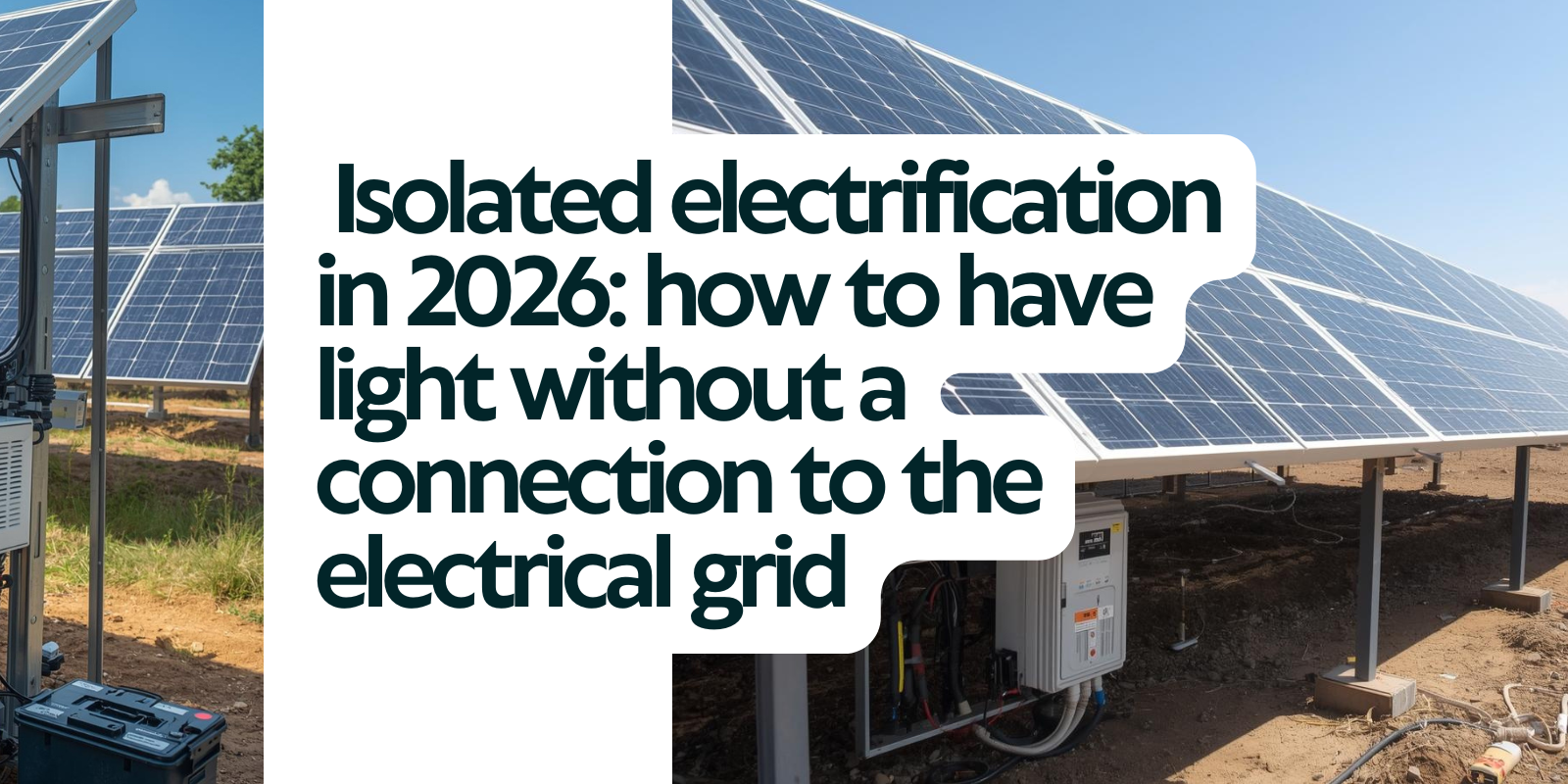
16 Jan Isolated electrification in 2026: how to have light without a connection to the electrical grid
In a world increasingly aware of sustainability and energy independence, off-grid electrification is emerging as a key solution for millions of people, as an efficient and competitive alternative for rural homes, farms, isolated businesses, shelters, and any project where grid connection is expensive, limited, or nonexistent
Imagine a not-so-distant future, in 2026, where access to electricity doesn’t depend on miles of cables or a centralized infrastructure. This is already a reality in many places, and innovations continue to open up new possibilities for off-grid electrification.
What is isolated electrification?
Off-grid electrification, also known as off-grid systems, refers to the generation of electricity independently, without being connected to the main power grid. In other words, it produces and consumes energy without relying on the general power grid. As we’ve already mentioned, these systems are ideal for rural homes and chalets, remote islands, farms and livestock operations, isolated industrial projects, recreational vehicles, shelters, cabins, and isolated facilities, or simply for those seeking greater energy self-sufficiency.
In 2026, lower equipment costs and improved batteries will make these solutions increasingly accessible and efficient.
Basic components of an isolated installation
A typical system consists of:
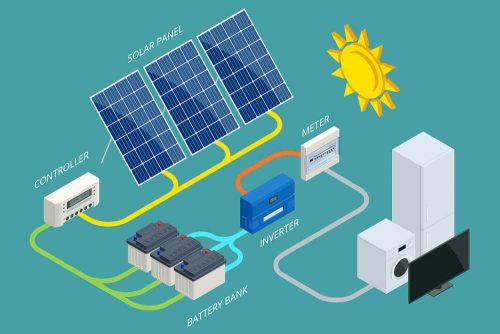 A source of energy generation : the most common are photovoltaic solar panels, which capture sunlight and convert it into electricity (direct current). However, other sources such as wind turbines, hydroelectric generators, or backup generators (gasoline/diesel) are also possible.
- Batteries or energy storage systems : These store energy for use when there is no production, for example, at night or on cloudy days. Batteries are crucial for storing the energy generated during the day (or during periods of high production) and using it when the sun isn’t shining. By 2026, lithium-ion batteries had evolved significantly, offering higher energy density, longer lifecycles, and reduced costs. Furthermore, innovative options such as flow batteries and solid-state batteries are emerging, promising even greater safety and durability.
- Inverter : transforms direct current into alternating current, suitable for domestic sockets.
- Charge regulator : protects and optimizes the charging and discharging of batteries, extending their lifespan.
- Structures, protections and cabling: Ensure safe and efficient operation of the system.
Is the installation of isolated electrification legal in Spain?
Yes, off-grid electrification is completely legal in Spain. In fact, it is regulated and permitted, and has gained considerable popularity in recent years, especially after legislative changes that favor self-consumption and energy independence. While technically considered within the framework of renewable self-consumption, these systems, being off-grid, have a specific legal regime and are recognized as a valid form of self-consumption under the current framework, as outlined in Royal Decree 244/2019.
Isolated electrification is not subject to the old “sun tax” and does not require agreements with energy suppliers or access and connection permits, because it does not feed energy into the grid.
It is not mandatory to legalize it in all cases, but it is recommended to register and certify the system to guarantee security, technical standards and access to possible aid or subsidies.
Like any electrical installation, it must comply with applicable safety regulations (such as the Low Voltage Electrotechnical Regulation – REBT) to ensure the protection of people and property. This means that the installation must be carried out by qualified professionals using approved materials.
In addition, they usually require a building permit or prior notification to the city council and a building permit, according to municipal regulations, and normally the following are required: a technical report or project by a competent technician, an electrical installation certificate (CIE) and, in many cases, a responsible declaration and registration with Industry as a low voltage installation.
Each autonomous community may have specific procedures and documentation requirements, so it is recommended that the design and legalization be carried out by an authorized installer in your area.
In short, not only is it legal, but the current regulatory framework in Spain is quite favorable for this type of installation. The most important thing is to ensure that the installation complies with safety standards to avoid risks.
Advantages and disadvantages of off-grid or isolated installations
Advantages of isolated electrification:
- Ideal solution for remote areas where the grid doesn’t reach: In many rural areas or isolated terrains, laying a power line can be extremely expensive or technically unfeasible. Standalone electrification allows you to have electricity where it was previously impossible—with complete independence from the power company.
- Predictable costs in the medium and long term and scalable according to needs: Instead of paying for a connection and monthly electricity bills, a well-sized isolated system can cover all energy needs for years with minimal operating costs.
- Energy independence: The system is not dependent on external power outages or energy price volatility. With proper design and storage, it can guarantee a constant electricity supply even during periods of low solar radiation.
Disadvantages
- Initial cost of off-grid electrification installation: Although competitive, proper sizing (panels + batteries + inverter) can be expensive
- Consumption management: Requires load planning and usage control.
- Batteries: They are the most expensive and critical component — their quality influences the lifespan of the system.
How to “have light without access to the grid”?
Designing an isolated installation requires precise planning:
- Calculate estimated consumption : Calculate how much energy you need per day (in kWh). List appliances (LED lights, refrigerator, water pump, routers, etc.) and hours of use per day to properly size the system. Calculate the desired autonomy.
- Sizing panels and batteries : An installer uses IDAE technical guides to calculate the number of modules, battery capacity, and inverter power. Soma GenPower installers will provide you with a specific proposal tailored to your needs.
- Respect the regulations: even if it is not connected to the network, it is usually necessary to obtain a municipal license and submit a responsible declaration and electrical installation certificate.
Conclusion: A Future Marked by Energy Autonomy
 In short, isolated electrification is not just an alternative, but a serious, legal and increasingly affordable solution, provided it is properly sized to guarantee access to energy.
Beyond the convenience of having light anywhere, off-grid systems represent a fundamental step towards a more sustainable and decentralized energy model. They offer the freedom to choose how and when we consume energy, reduce our carbon footprint, and empower individuals and communities to take control of their electricity needs. In a constantly changing world, the ability to generate our own energy is not just an advantage, but a necessity that defines a brighter and more self-sufficient future for everyone.
At Soma GenPower, we are experts in the installation of off-grid electrification systems. If you are interested in an off-grid self-consumption installation, please do not hesitate to contact us. We will advise you without obligation and find the best solution for your specific needs.
Visit our installations section to see examples of our work.
No Comments