

18 Nov Discover how to harness all the energy produced by your solar panels
If you already have a photovoltaic installation with solar panels at your home, business or industry, you have already taken an important step, but do you think you are making the most of all the energy they produce?
There can be discrepancies between the energy you produce and the energy you need at any given time of day, and these discrepancies can make the difference between a properly functioning system and one that truly performs well thanks to adjustments we can make, such as shifting loads, adding batteries, combining the system with an air source heat pump, or utilizing surplus energy. The choice of these adjustments depends on your specific energy consumption patterns.
Why not take advantage of all the energy your solar panels produce?

Thus, in many facilities, during peak production hours, energy is fed into the grid that we will later have to buy back at a different and likely much more expensive price.
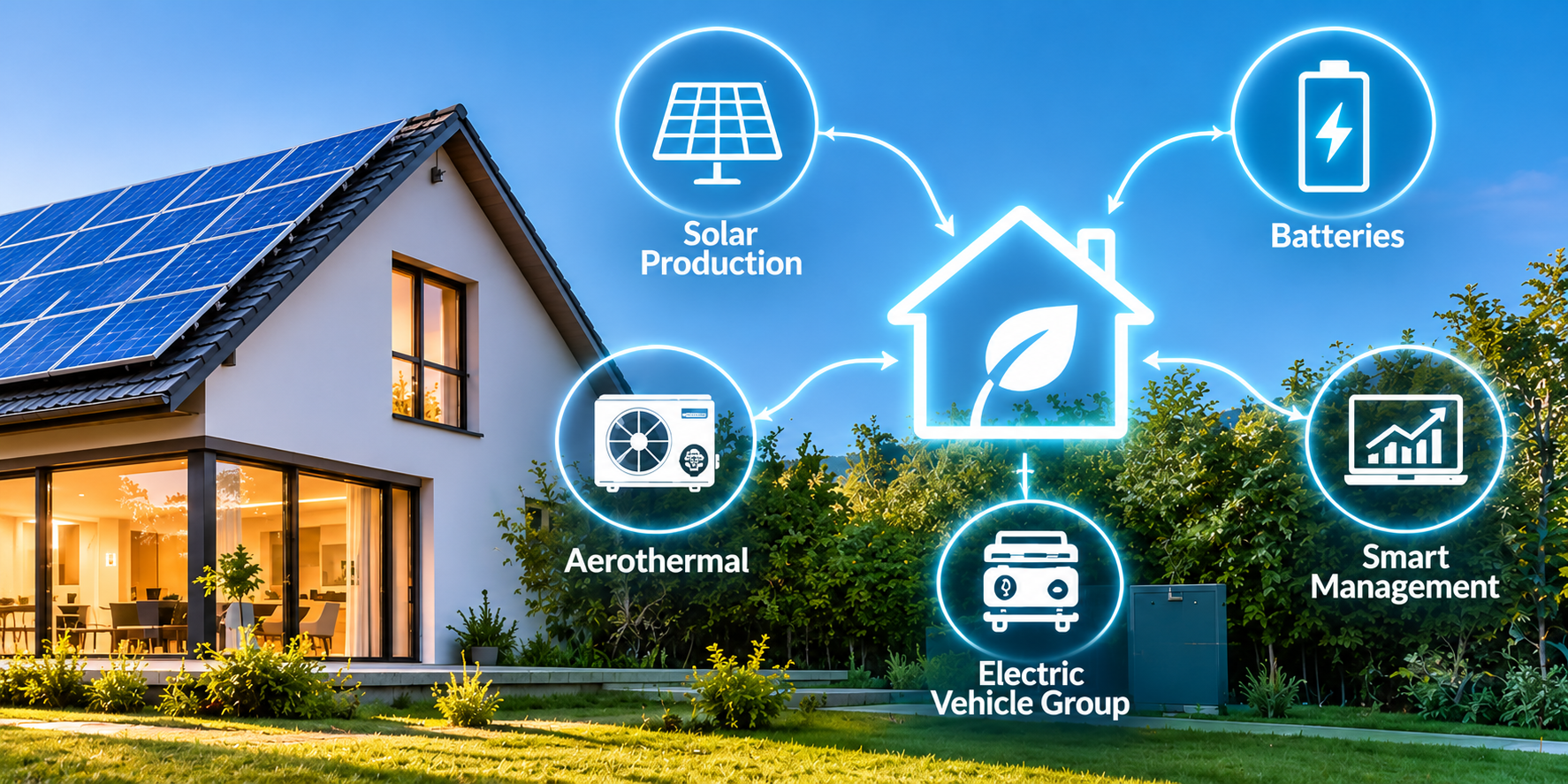
To avoid this we have several tools: solar batteries, combining solar panels with aerothermal energy and having an energy management system.
Add solar batteries to the photovoltaic installation
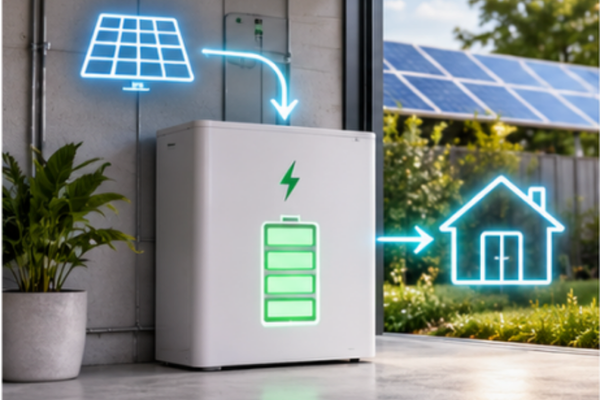
The system’s batteries store unused energy from the day so you can use it when the solar panels aren’t producing, typically at night or during off-peak hours. This allows us to increase our self-sufficiency and reduce the amount of electricity we have to buy. Furthermore, the batteries are self-managing based on the specific needs of each installation.
When is it necessary to install them?
It depends on several variables:
- How much and when do you consume? If you consume mostly during the day, the battery will provide less than if you concentrate your consumption in the afternoon and evening.
- How much do your plates produce and how much surplus do you have left?
- The price of the energy you buy and the price of the energy you feed into the grid.
- The initial investment , which must be compared with the actual savings.
What happens if we don’t have batteries in our installation?
If we don’t have batteries in our installation, we have other options to use that surplus energy:
- Compensation for surplus energy. If your installation meets the requirements, the energy you feed into the grid will be deducted from your bill, as agreed with your energy supplier.
- Virtual battery or solar wallet. Although it’s called a virtual battery, it’s not a physical battery that stores energy. Instead, it accumulates the monetary value of the excess energy we generate, which can then be used to offset future bills. The price and terms depend on the energy company we have a contract with.
Before deciding on a battery for your installation, it’s advisable to study the actual consumption data and perform the necessary calculations to determine whether it’s appropriate to include a battery in the installation and, if so, ensure that it is properly sized according to the needs of your installation.
At Soma GenPower we study your particular case to advise you on whether or not it is convenient to include a battery in your installation.
Combining solar panels with aerothermal energy
Aerothermal systems harness the thermal energy of the outside air to provide heating, cooling, and hot water. They require electricity to operate, which can be generated by solar panels. This way, they complement each other, promoting energy independence and improving the overall efficiency of the system.
For example, with a combined system, we could program the system to produce hot water during the sunniest hours using that energy that might otherwise be left over and would have to be fed into the grid.
At GenPower we work with photovoltaic self-consumption and aerothermal energy, separately or combined, and we adapt each project to the client’s consumption and climate control needs.
Install an energy management system
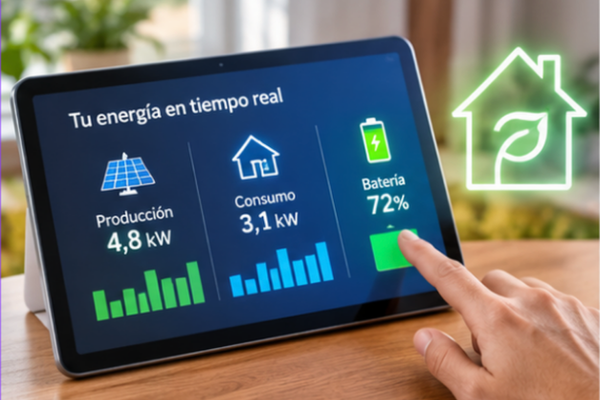
The monitoring systems for your installations tell you in real time how much your panels are producing, how much you’re spending, and how much energy you’re feeding back into the grid. By paying attention to this recurring data, you can see how to improve your savings and use appliances or heating/cooling systems when energy production is highest, identify the biggest energy consumers, and so on.
Furthermore, nowadays these energy management systems incorporate automation and artificial intelligence tools that help to further improve energy management since they take into account other data besides your consumption habits, such as weather forecasts or the price of electricity at any given time.
| Option | What does it consist of? | When is it convenient | Limitation |
|---|---|---|---|
| Move consumption | Schedule appliances, hot water or air conditioning for the sunniest hours | If you can adapt schedules or have programmable equipment | It depends on whether your routines allow it. |
| Solar battery | Save the excess energy to use at night | If you consume mostly in the afternoon and evening and have frequent surpluses | It requires investment and proper sizing. |
| Compensation for surpluses | The energy you feed into the grid is deducted from your bill | If you have no battery or even if you have excess energy | It requires meeting the requirements and depends on the marketing company. |
| Virtual battery | Accumulate the economic value of the surpluses to apply it to subsequent invoices | If your production and consumption vary greatly from month to month | It does not store actual energy, and conditions vary by company. |
Which is the best option?
Consumption habits are not the same in a home where someone is at home all day as in one where they work all day and only consume at night, and also not in an industrial building, a shop, a livestock farm or an agricultural facility.
Therefore, we can improve a photovoltaic installation by adding batteries, but sometimes it’s enough to organize energy consumption, combine systems, or use automation. And in installations with more demanding power requirements, several technologies can be combined, including generators as backup.
At GenPower, we have extensive experience installing photovoltaic solar energy systems combined with batteries, heat pumps, and generators in a wide variety of environments. For examples, we recommend visiting the ” Some Jobs ” section of our website, where you’ll find examples such as the self-consumption system with heat pumps that we installed in Segrià (Lleida): photovoltaic panels, batteries, and heat pump climate control to make the most of the home’s energy.
Producing well is the beginning; managing well is what saves money.
If we have a photovoltaic installation, we shouldn’t just think about producing the maximum possible energy. Storing and managing consumption are just as important as production.
If you already have a solar panel system, you should check if you’re getting the most out of it. And if you’re thinking about installing them, consider from the outset which solution best suits your energy consumption habits.
At GenPower, we analyze each project individually. If you want to improve the performance of your installation or learn about your options, contact us for a free consultation.
Frequently Asked Questions
How do I know if my solar panel installation is efficient?
On your facility’s monitoring system or panel, you can see how much energy you consume directly, how much you feed into the grid, and how much you purchase. If you feed in a lot at midday and purchase a lot at night, you can improve this with some of the tools we’ve discussed in this article. Keep in mind that productivity and efficiency analyses can’t be based on just one year; they need to cover at least a full calendar year, and even longer. This way, we’ll have a realistic and reliable picture of how our facility is operating and will be able to implement the best solution.
Is it worth installing solar batteries?
It depends on several variables: your consumption habits, your energy usage patterns, the solar panels’ output, and the price of energy. It’s advisable to analyze each installation before deciding and determine if investing in a battery will be cost-effective. Furthermore, it’s important to remember that implementing a physical energy storage battery will provide an emergency backup power supply in case of a grid failure. This is a crucial factor to consider when evaluating not only the potential savings but also the security and reliability of your electricity supply.
What is a virtual drum kit?
It’s a system from your energy supplier that accumulates the economic value of the surplus electricity you feed into the grid to apply to future bills. It doesn’t physically store electricity; however, the terms and conditions vary depending on the company.
Can solar panels and aerothermal energy be combined?
Yes. Aerothermal systems need electricity to operate, and some of that can come from your own solar panels. Solar self-consumption and aerothermal systems represent the best energy combination currently available, resulting in a highly efficient system across the board.
What happens to the excess data if I don’t have a battery?
They are fed into the grid. If your installation meets the requirements for surplus compensation, they will be deducted from your bill according to your energy supplier’s terms and conditions.
No Comments